

Who sits at the top table at a wedding?
For many couples, deciding who sits on the top table is one of the trickiest parts of wedding planning. Blended families or troublesome dynamics and old traditions don't always fit neatly together.
If you want to avoid hurting feelings and drama with your wedding seating arrangement, this article gives you some practical advice about how to achieve this.
Here's who traditionally sits at the top table, and how to make it work for your family.

At a wedding, who sits at the top table?
The top table at a wedding typically seats the couple, their parents, the best man and the maid of honour - around six to eight people in total. This line-up represents the joining of both families, with the couple seated at the centre.
The typical top table wedding line-up
The classic top table usually includes:
The couple, seated together in the middle
Both sets of parents
The best man
The maid of honour
Partners of the wedding party are traditionally seated at a nearby guest table rather than at the top table to keep numbers manageable.
Side note: Roles don't have to follow traditional gender lines. Many couples choose a best woman, a man of honour, or whoever is closest to them. The table works just as well either way. Your wedding venue can support planning and top table wedding etiquette.

What is the traditional wedding top table seating plan?
A conventional seating plan for a wedding top table alternates men and women. The couple are at the centre, while the parents and the wedding party sit on either side. Reading the table left to right, as your guests see it, it historically runs as follows:
Good to know: This top table order dates back to when the bride's parents traditionally hosted and paid for the wedding, hence their prime seats. Today, couples mostly host their own weddings, and this old-fashioned reasoning is often viewed as antiquated. You should feel free to set the convention aside entirely.
Do you have to seat divorced or remarried parents together at a wedding?
No, you don't need to seat divorced or remarried parents side by side if it makes anyone uncomfortable.
Stepfamilies are common. The ONS Census 2021 data shows there were 781,000 step-families in England and Wales. If your family doesn't fit the traditional mould, you're in good company.
Here are a few ways to handle mixed family dynamics:
Seat parents with their current partners at their own tables, rather than on the top table and have your best friends with you instead.
Widen the top table so parents sit further apart, with other wedding party members acting as a buffer.
Give the top table seat to whoever played the biggest role in raising you, such as a stepparent or grandparent.
Skip a formal top table altogether (see below)
Remember: The people who love you most will likely be glad to be at your wedding. The seating plan probably matters far more to you than it does to them.

Do you need a top table at a wedding?
No, a traditional top table isn't compulsory for a wedding. Plenty of modern couples adopt an alternative that suits them better. Popular options include:
A sweetheart table. A small table for just the two of you, placed where the top table would normally sit.
A round top table. A softer and less formal arrangement than the traditional long line.
A “friends” top table. For many people, their friends are more like family than their actual family is. Reflect this in your top table seating plan.
No head table at all. The couple joins a table of close family or friends instead.
Good to know: If you want to avoid any awkwardness for friends or family, scrap a wedding seating plan altogether. Opt instead for an informal buffet-style meal where your guests can choose their own seats.
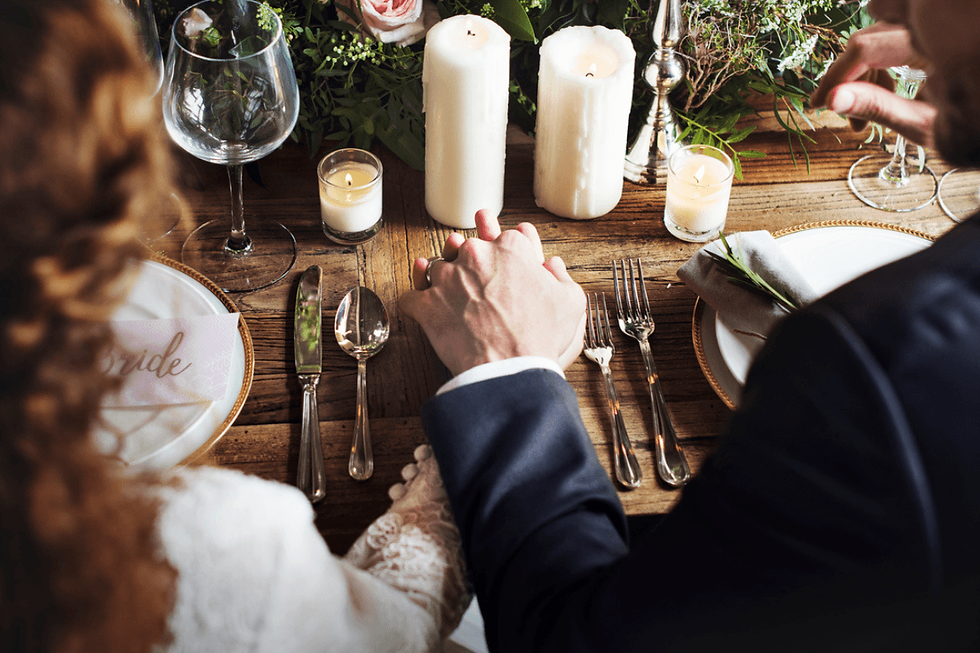
How do you plan your top table seating plan?
Start your top table seating plan by confirming numbers, then build outward from the couple.
Here are some simple steps to follow:
Decide who you want closest to you and why. This is your day, not an obligation list.
Choose a format. A traditional long table, round table, sweetheart table, or no top table.
Talk to parents or key family members early. This way, if you're planning something non-traditional, nobody will be surprised on the day.
Share your final seating plan with your wedding venue so they can set the room to match.
Sort your wedding seating plan with Springbank Manor
Having your favourite people around you at your wedding is an important part of the day. A wedding venue that supports you with every detail, including your table plan, can make a huge difference to your whole wedding experience.
If you're still choosing where to say “I do”, Springbank Manor is a beautiful, inclusive wedding venue in Lancashire. With years of experience to help your day run smoothly, the Springbank team can take the stress out of your wedding planning.


Comments